Visual Merchandising
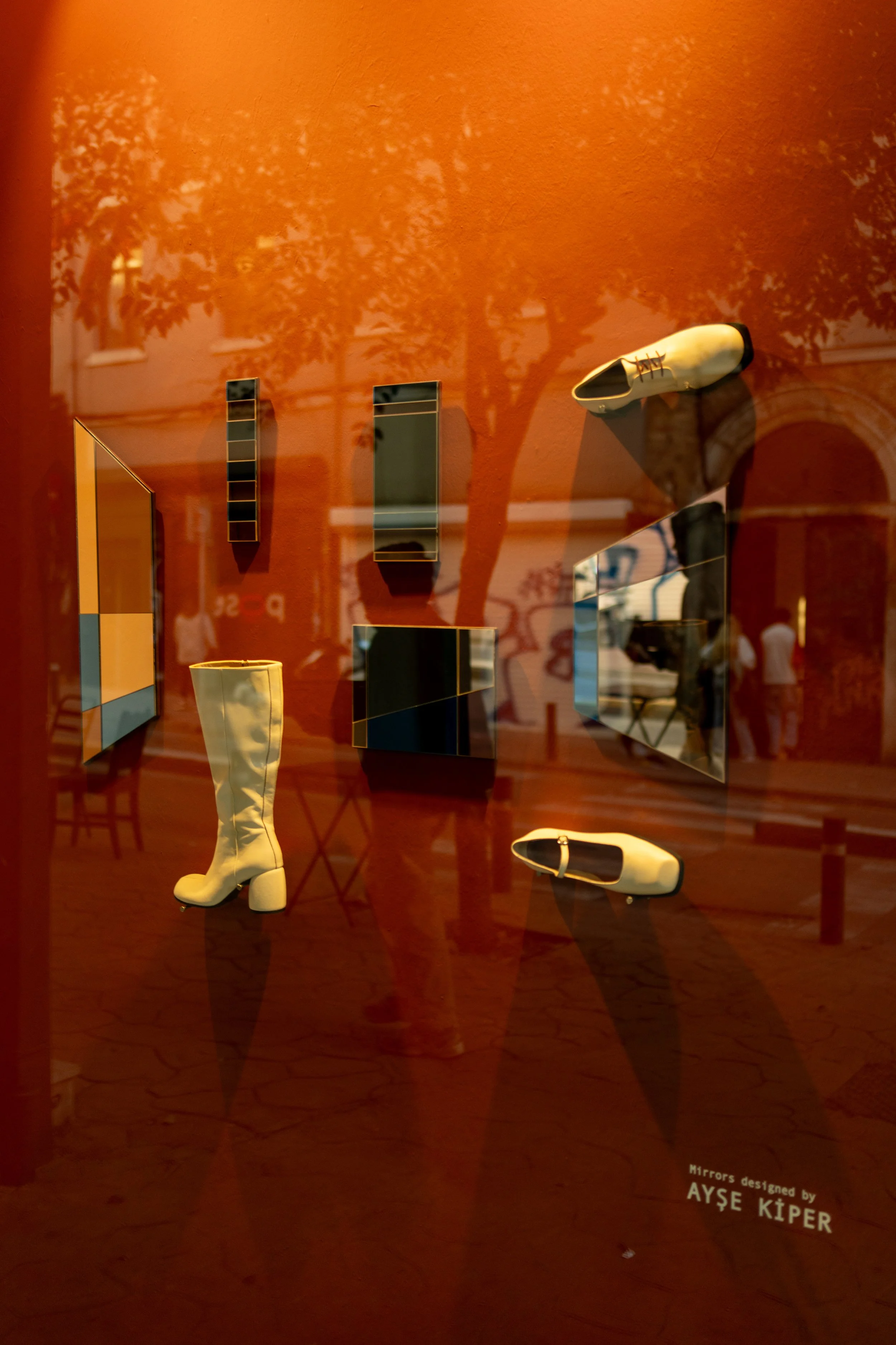
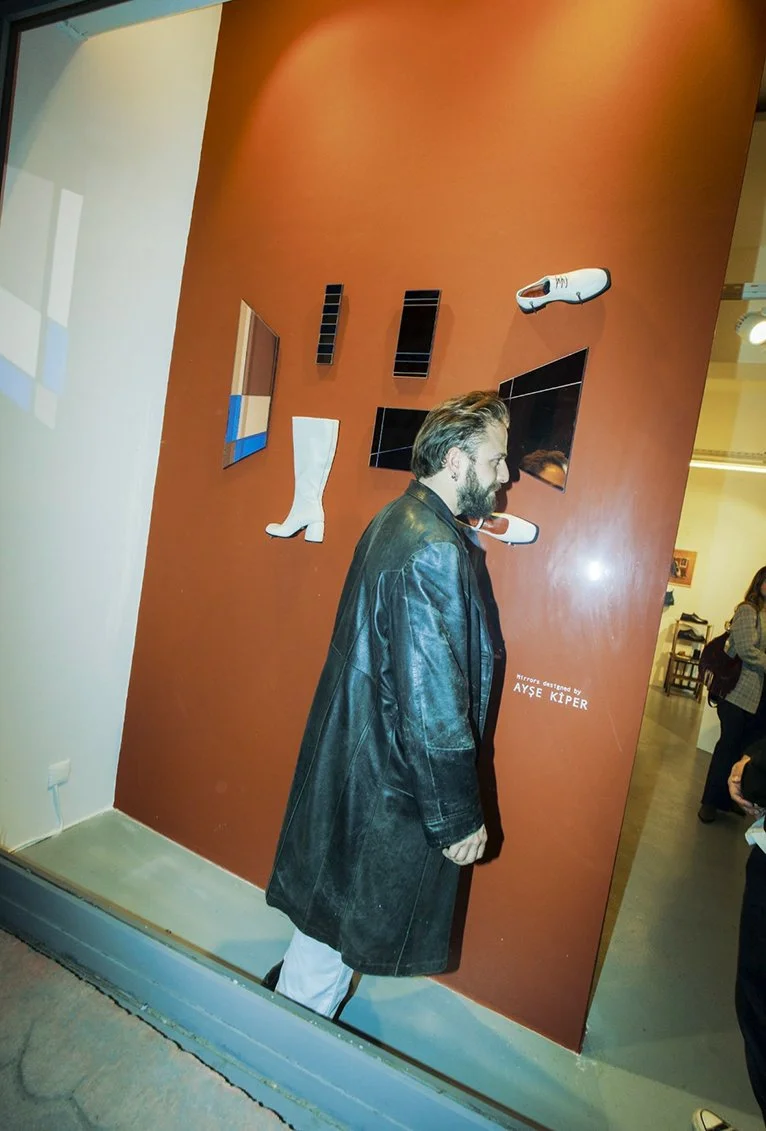
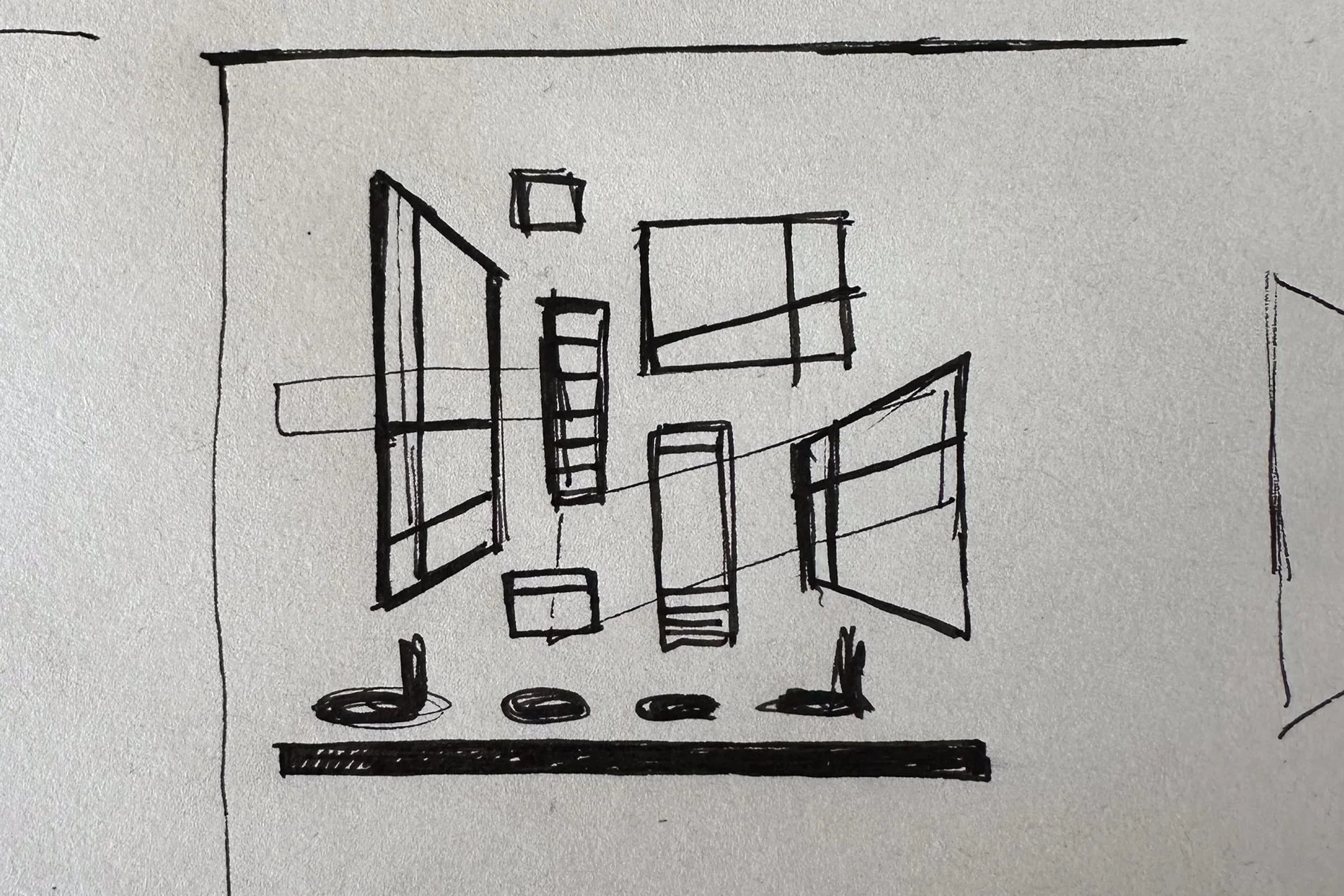
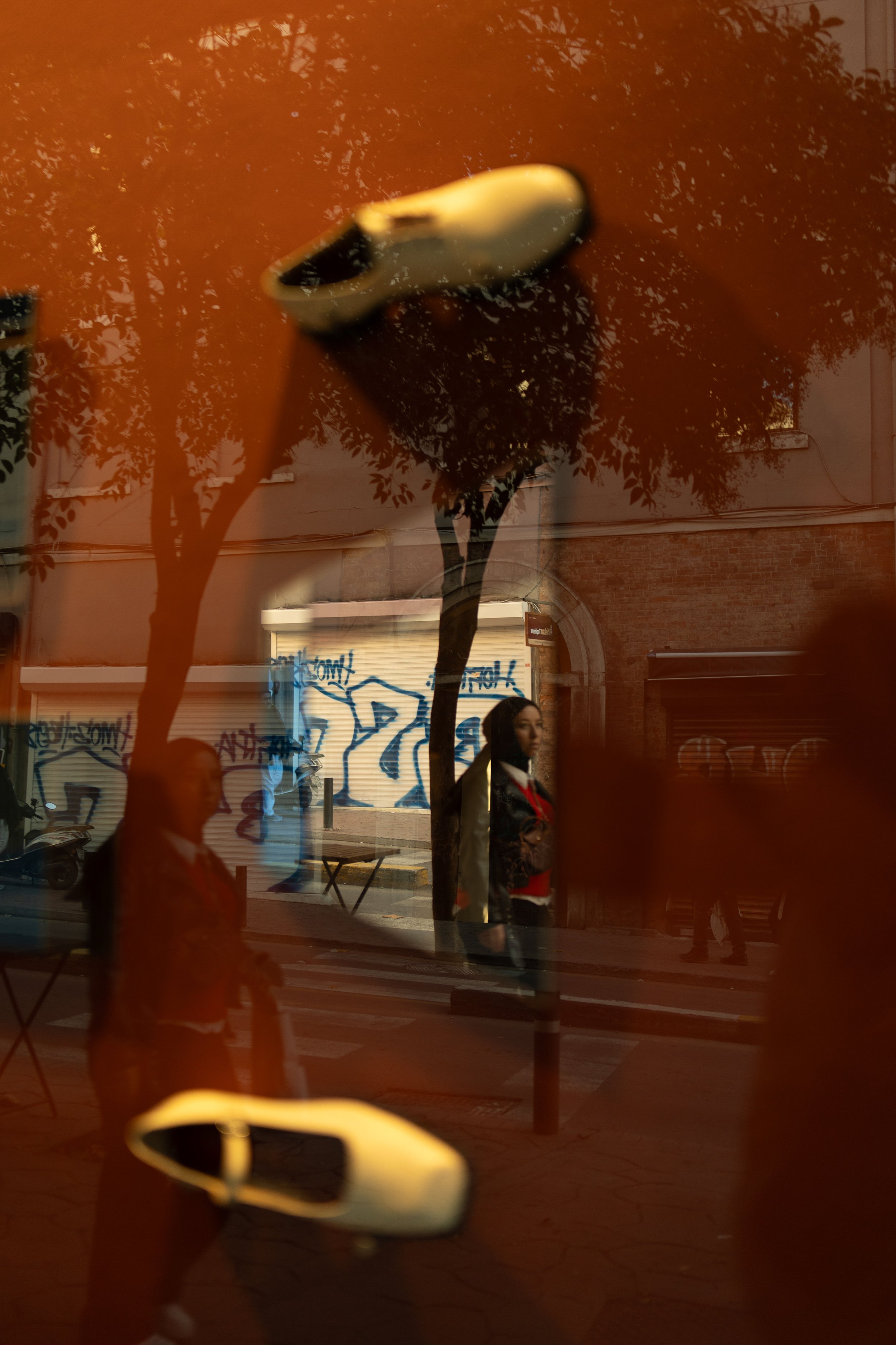
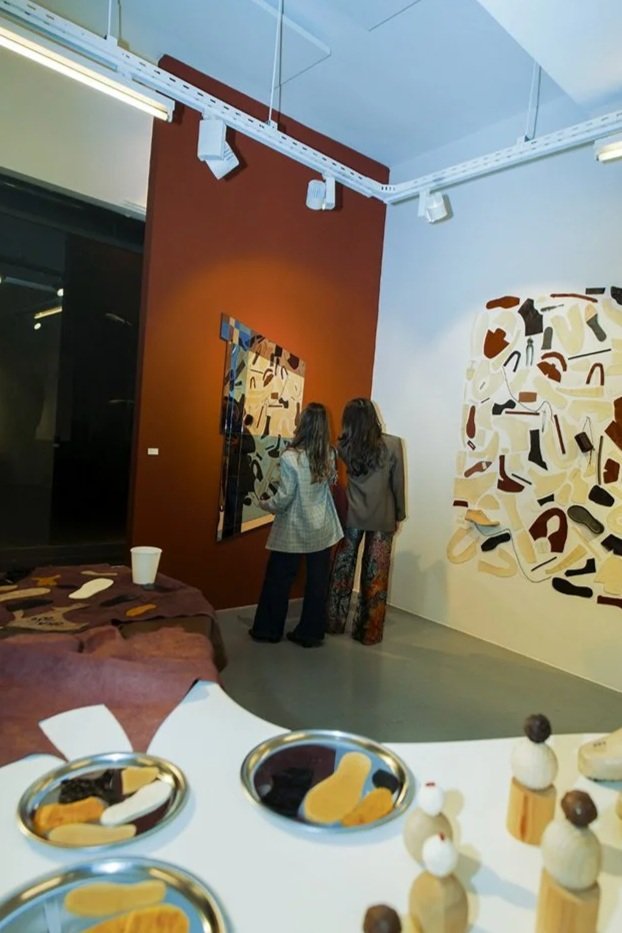
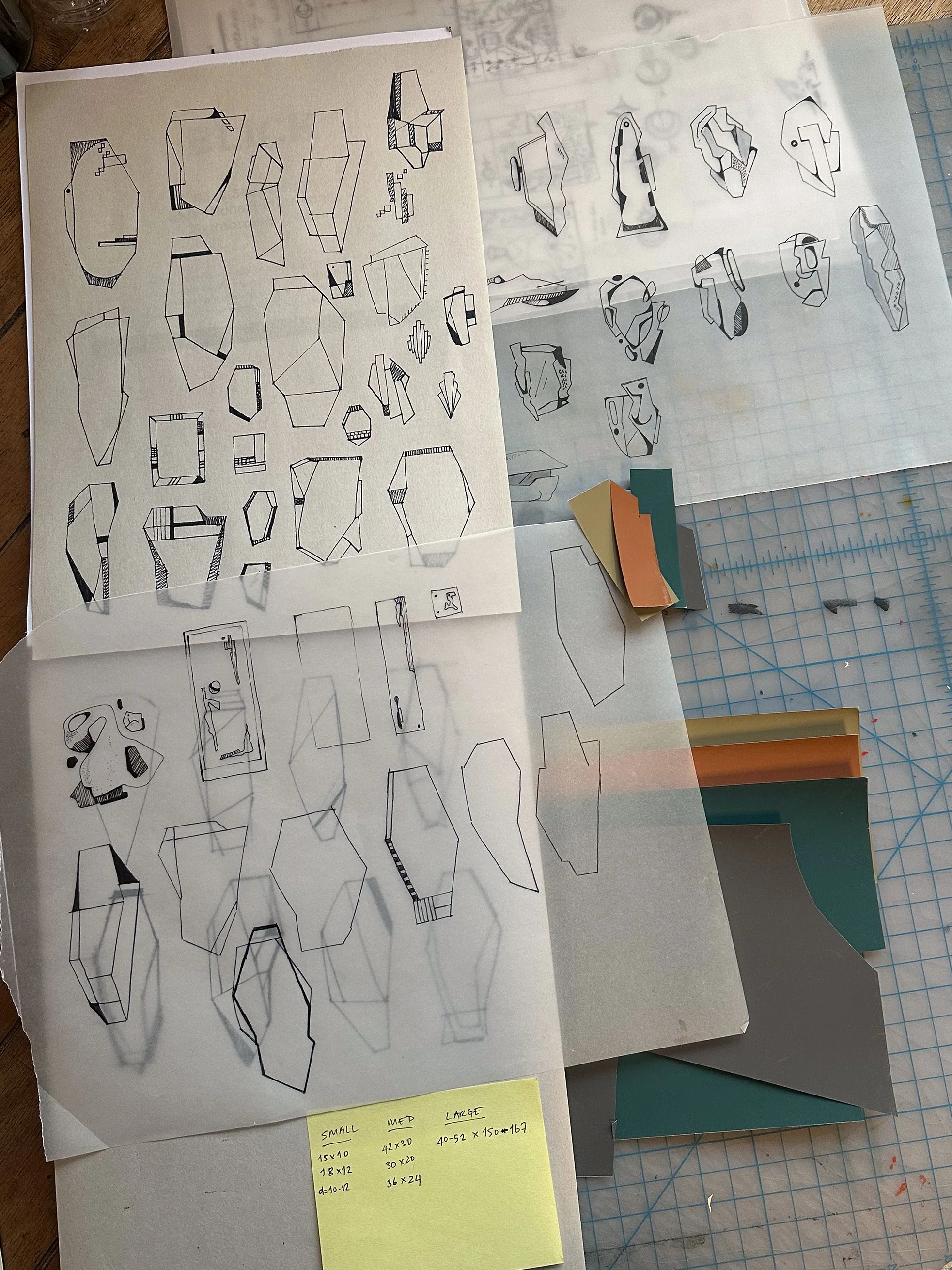
The Axo Mirror Series was developed as a window display and spatial composition for Atera Lab’s pop-up event, conceived in direct dialogue with the shoes it framed. Rather than serving as functional mirrors for use, the pieces operate as reflective surfaces within a carefully composed display—extending the visual language of the collection into space. Drawing from axonometric and perspective-based sketching, the series translates two-dimensional lines into three-dimensional forms through angled cuts and tinted reflective surfaces. Axo explores dualities such as 2D and 3D, planar and spatial, orthogonal and diagonal, using reflection as a material to construct depth, rhythm, and visual tension within the storefront.
Client
Atera Lab
Year
2025
Mirror Installation
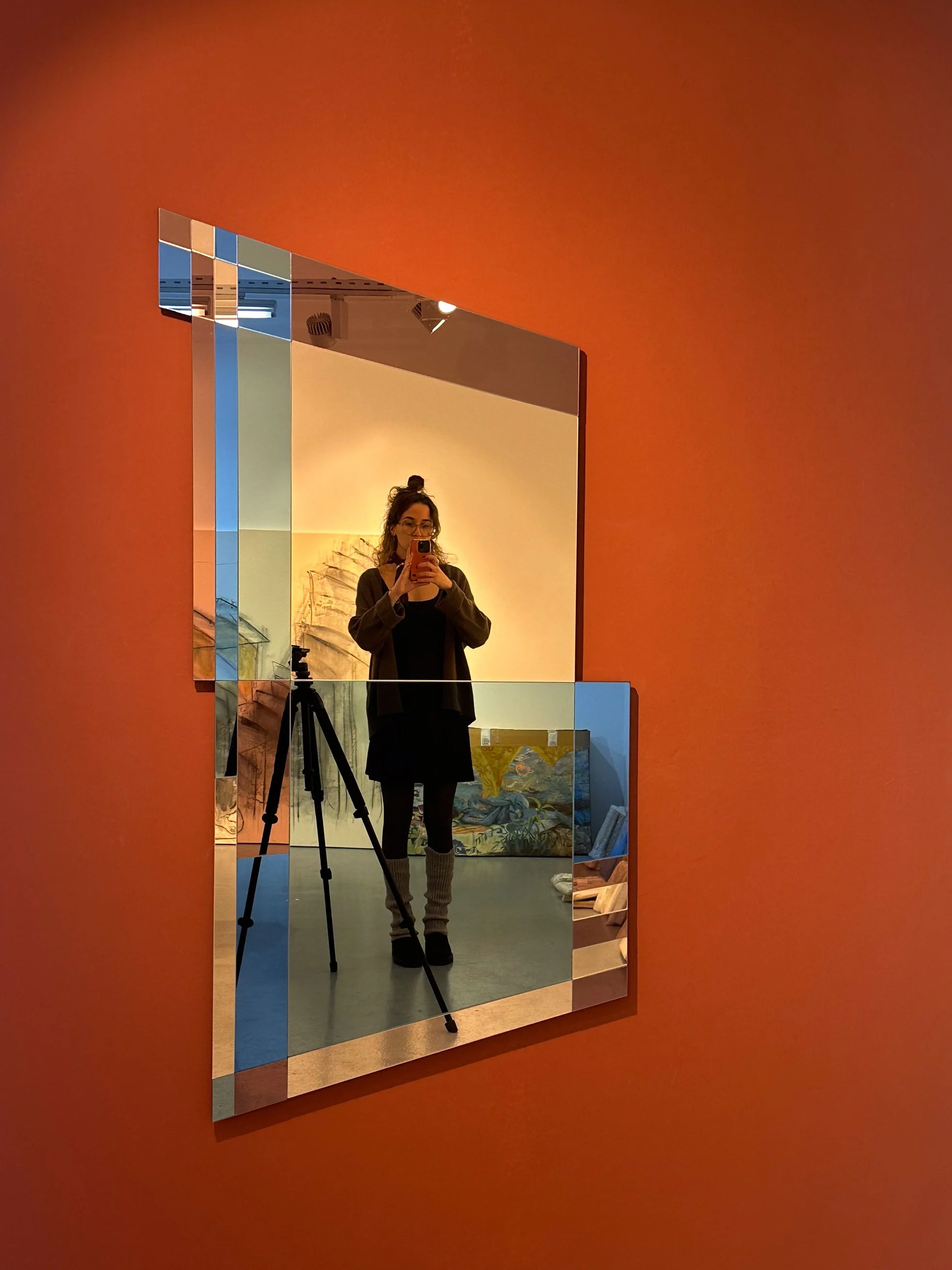
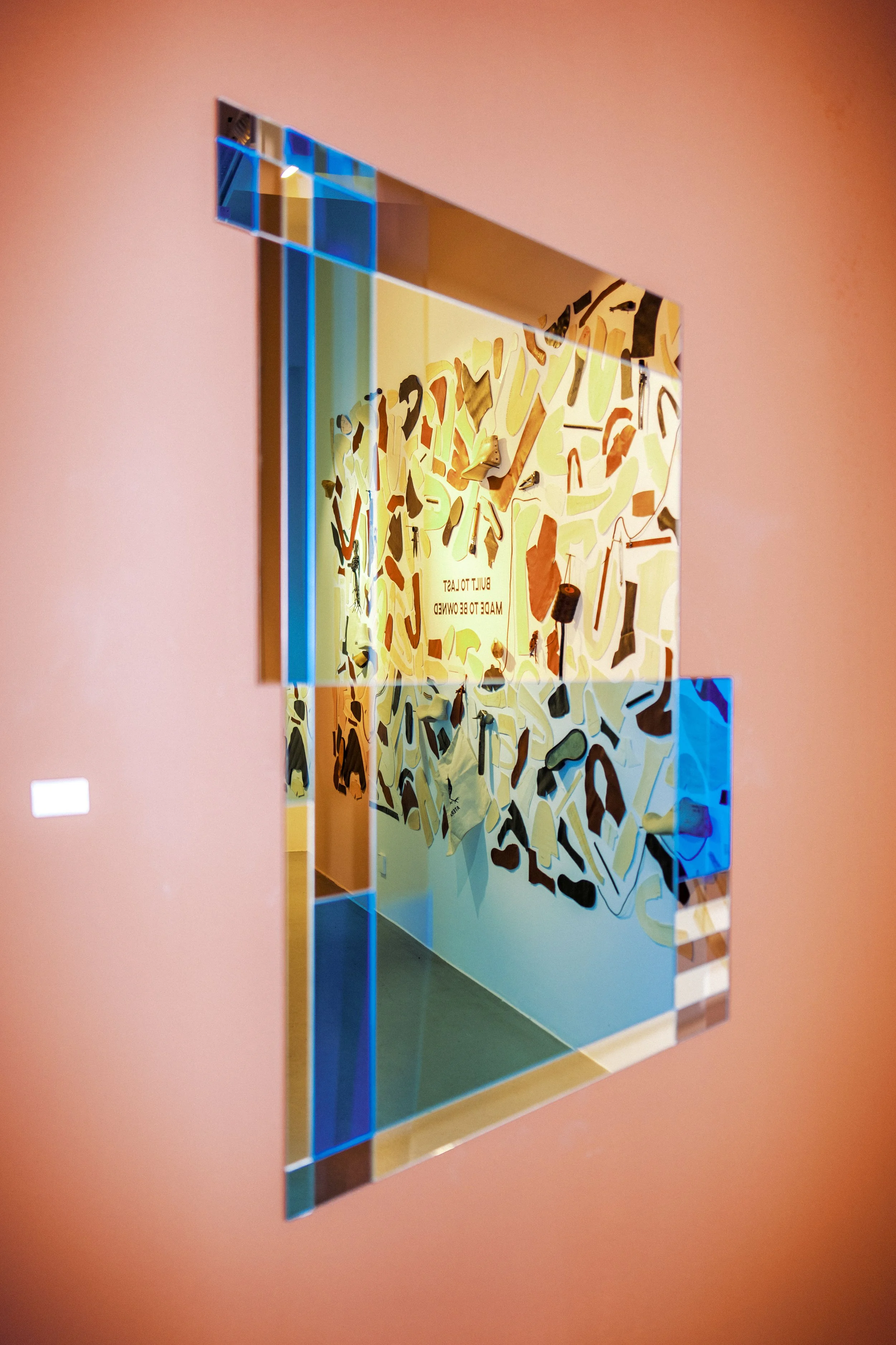
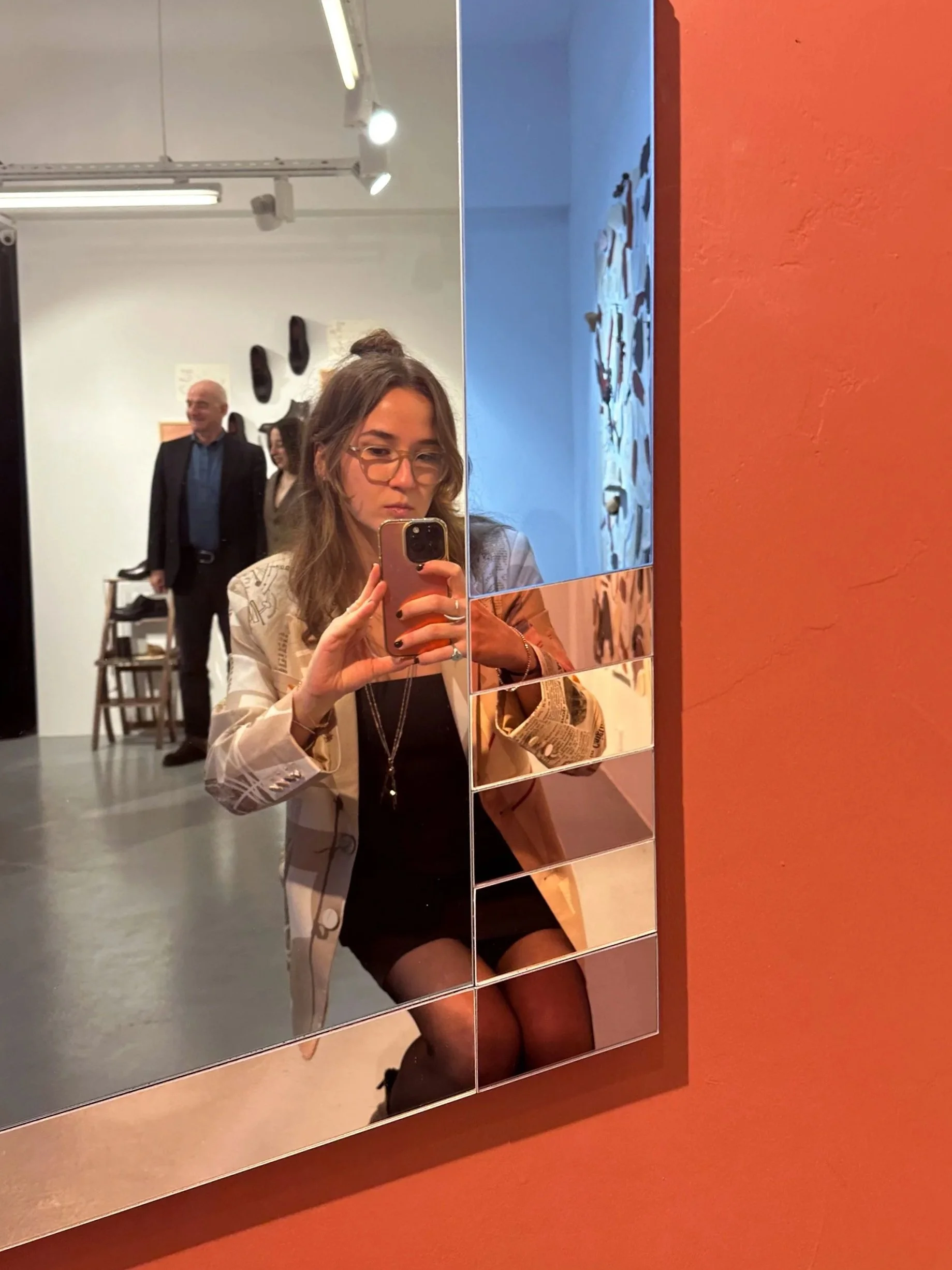
Ortho is a standalone mirror designed for use—inviting the body into the work through the act of looking, trying on, and self-observation. Rooted in one-point perspective and orthogonal geometry, its rectangular form with cut angles echoes architectural drawing while introducing spatial depth through reflection and materiality. As users engage with Ortho while trying on shoes, the mirror shifts between stillness and distortion, surface and space, vanity and depth. While fully functional, Ortho is conceived as a singular, collectible design piece that sits between object, drawing, and artwork.
Client
Atera Lab
Year
2025
Exhibition Design
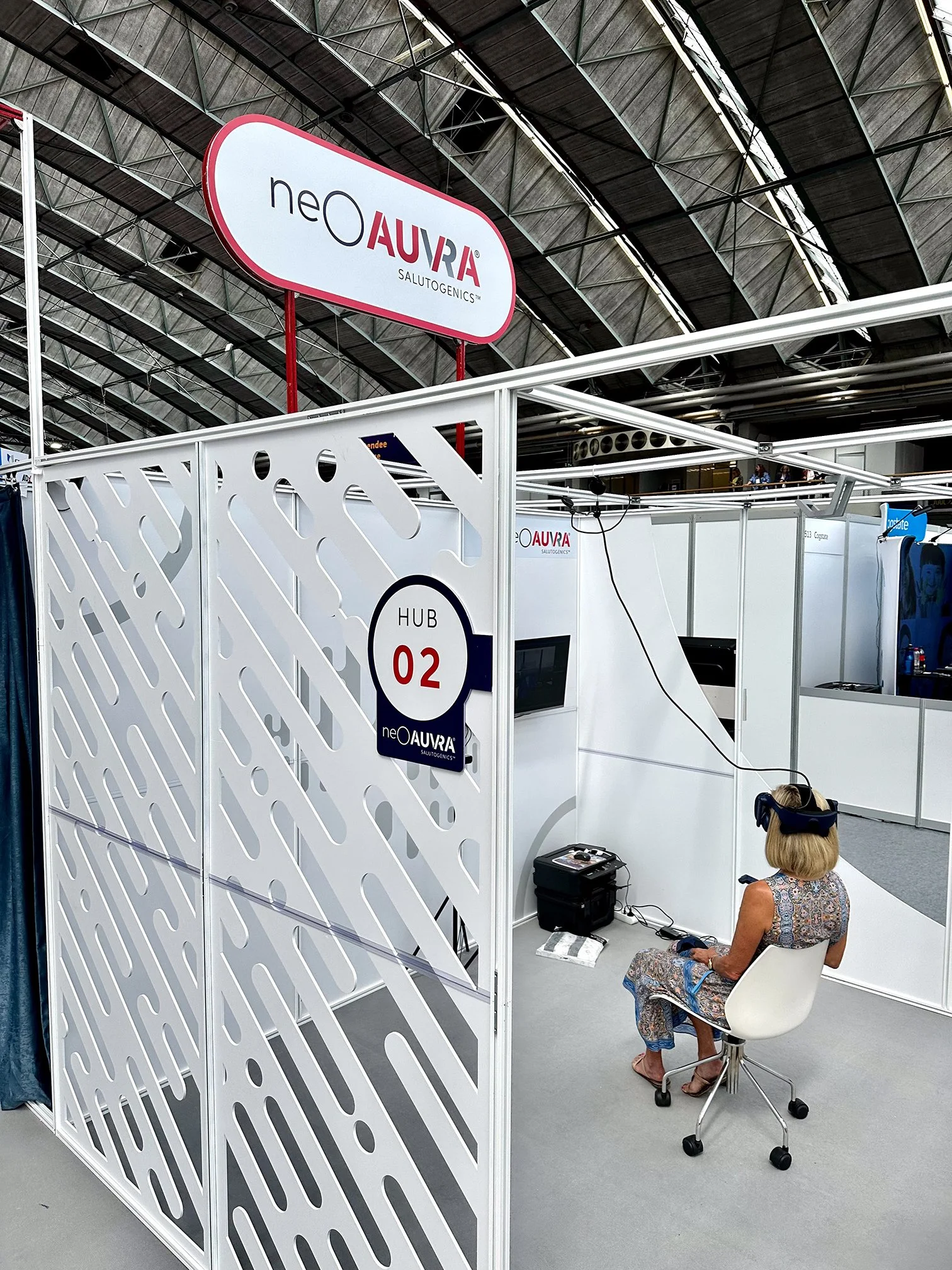
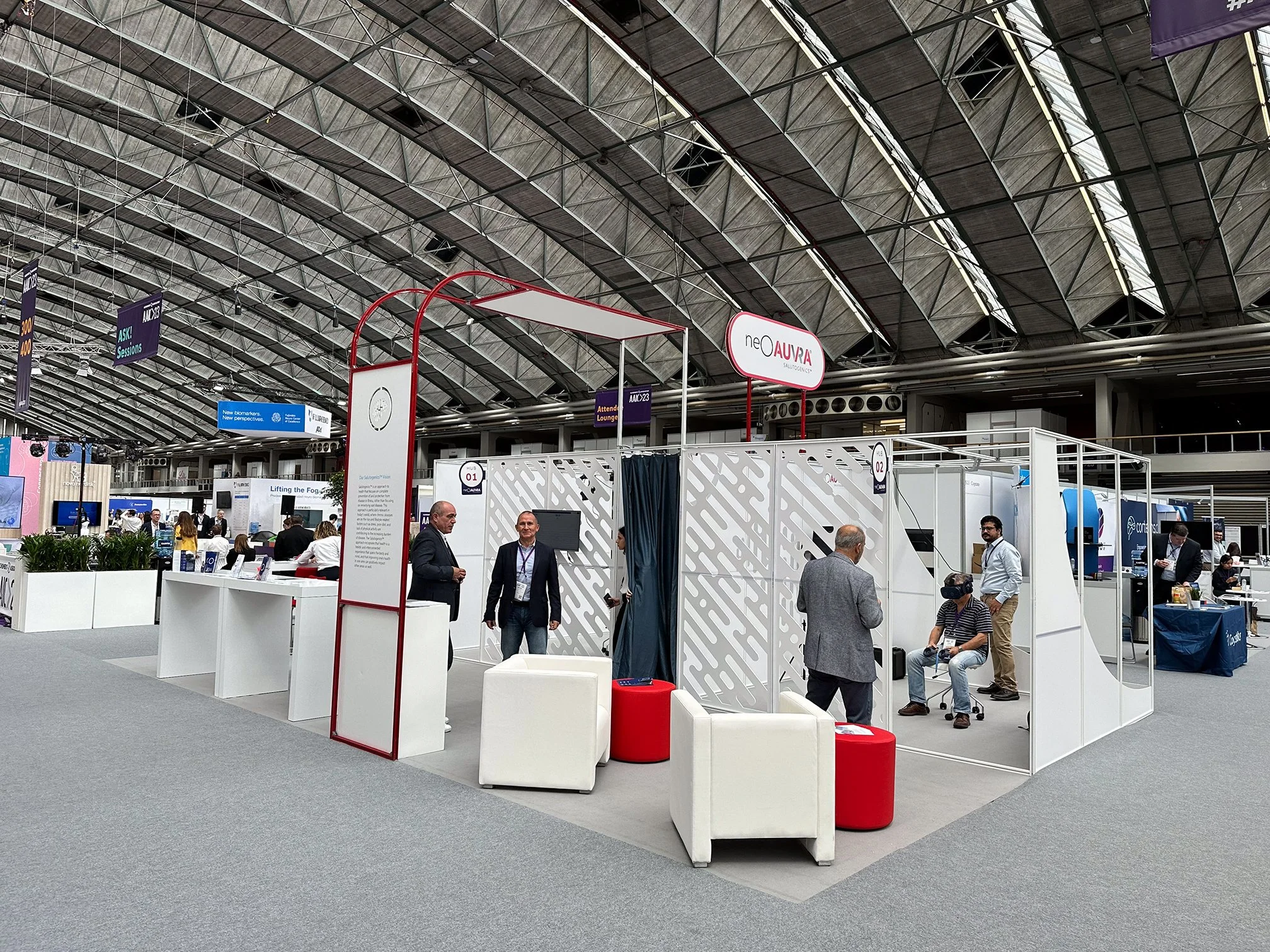
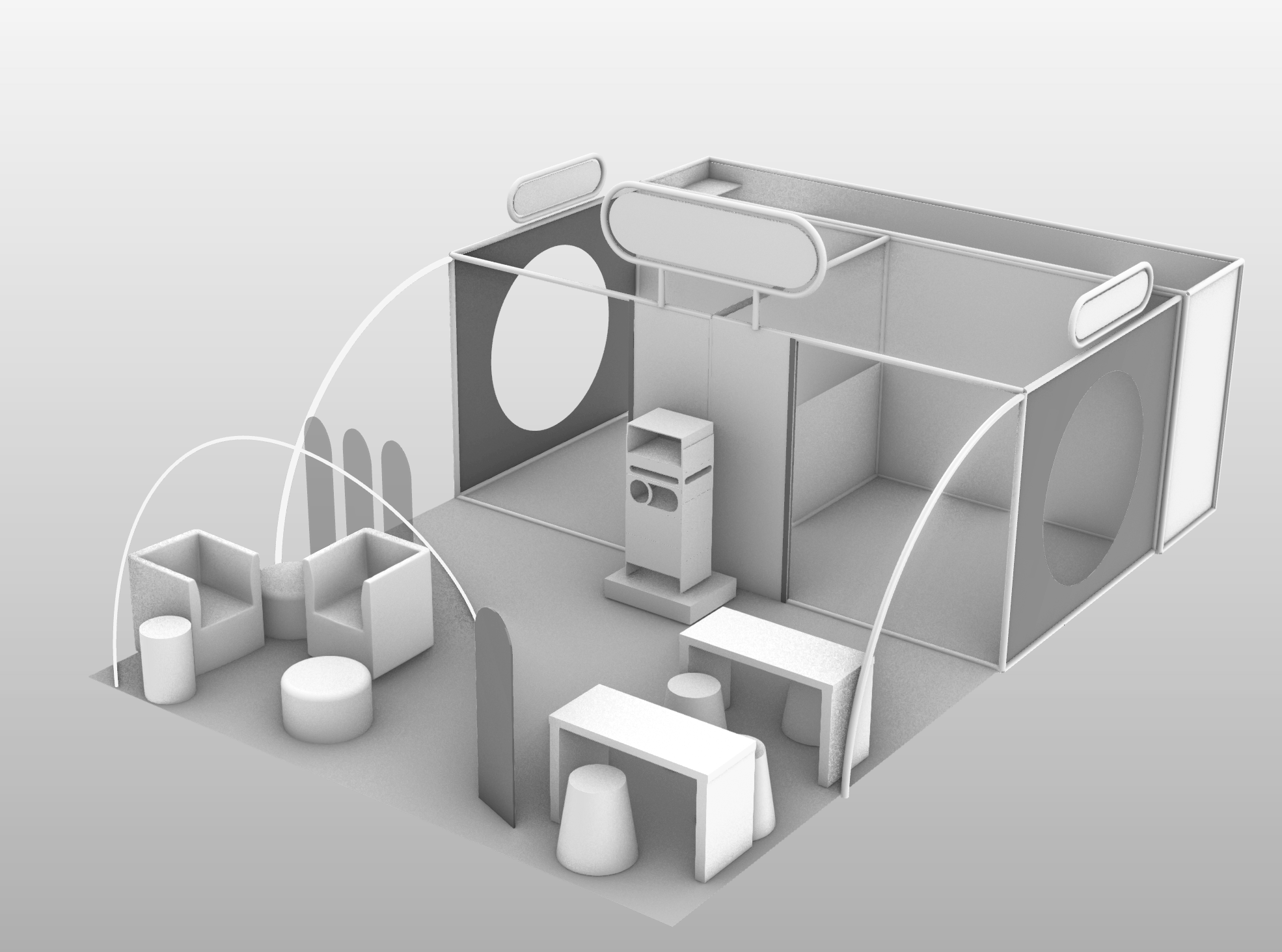
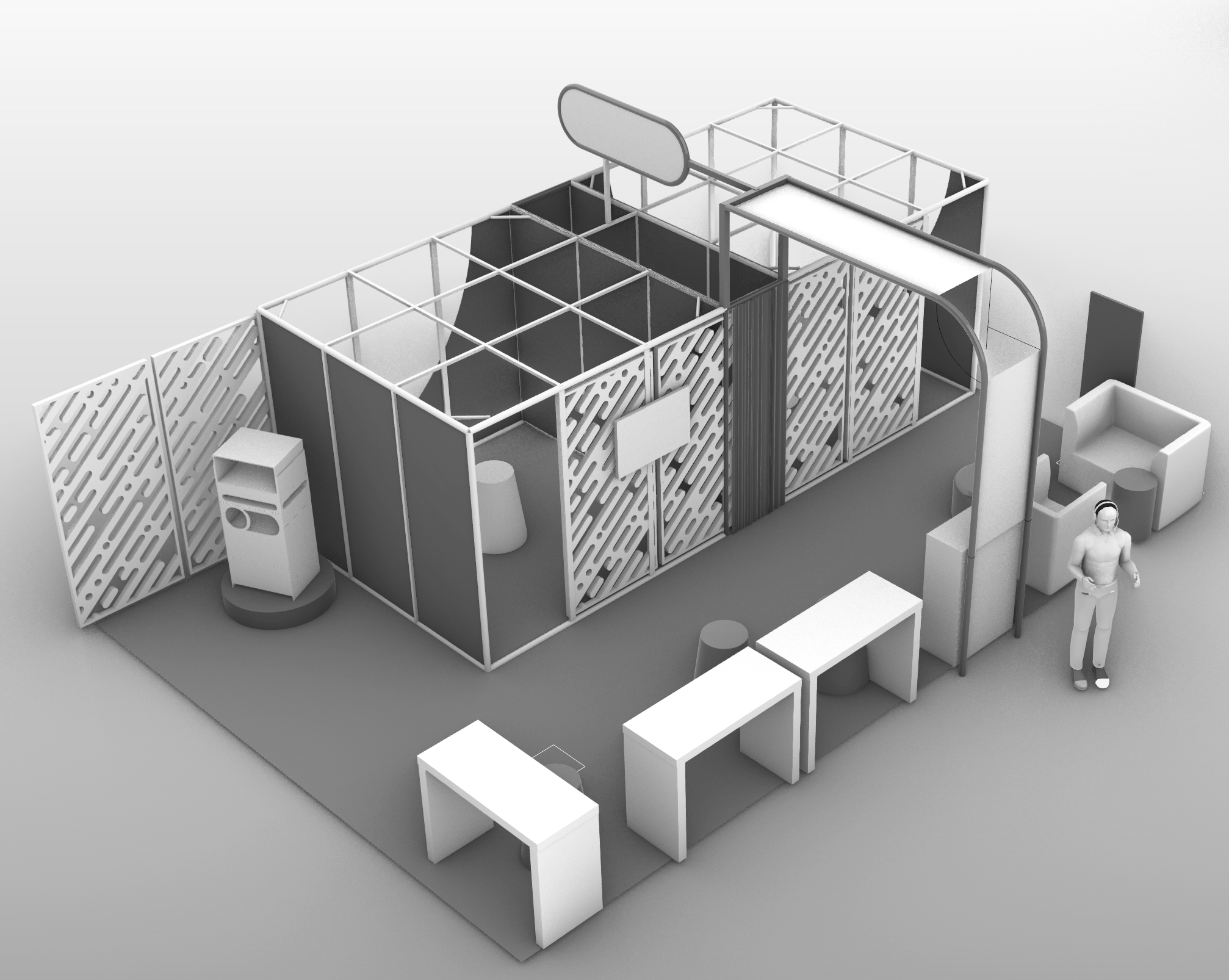
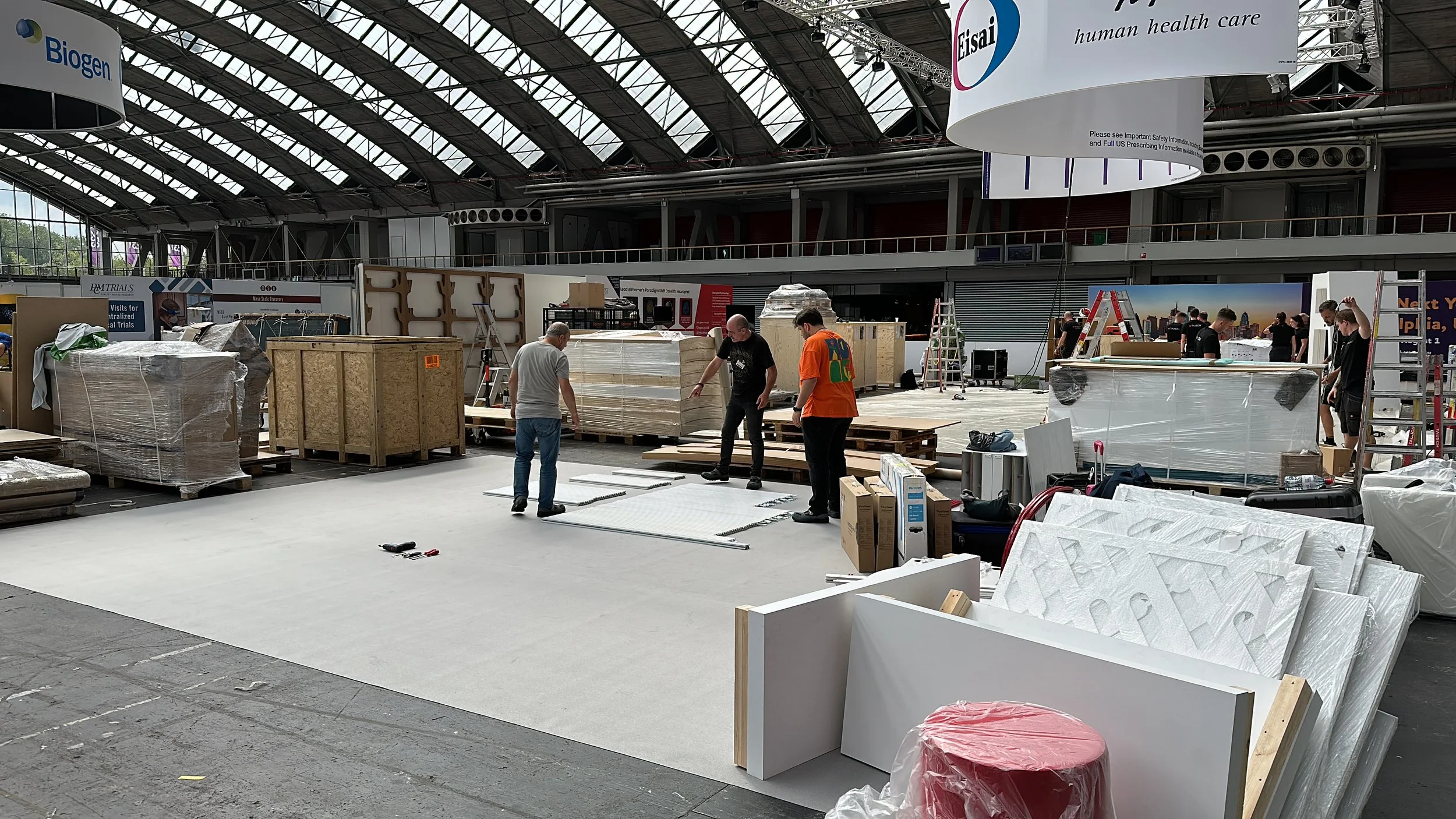
This project involved the design of our company’s exhibition booth for the Alzheimer’s Association International Conference, where strict technical and logistical constraints shaped every design decision. The stand was conceived as a fully modular system, engineered to fit into a single crate and be manually assembled on site without specialized equipment. In addition to public-facing areas, the layout had to accommodate a dedicated technical room and a fully integrated electrical infrastructure, including a ceiling grid designed to support sensors, cameras, and VR headsets. Within the assessment rooms, VR sensors required a carefully controlled environment—excessive reflections, visual noise, and external stimuli could disrupt their performance—making privacy, material selection, and surface treatment critical. The central challenge was to create sensor-safe, enclosed spaces while maintaining an open and inviting presence that would attract curiosity on the conference floor. Through deliberate decisions in form, materiality, and spatial organization, the booth balanced technical precision with a futuristic, health-focused aesthetic, successfully meeting both experiential and operational demands while reflecting the brand’s vision.
Client
Neo Auvra
Year
2023
Neon Archway

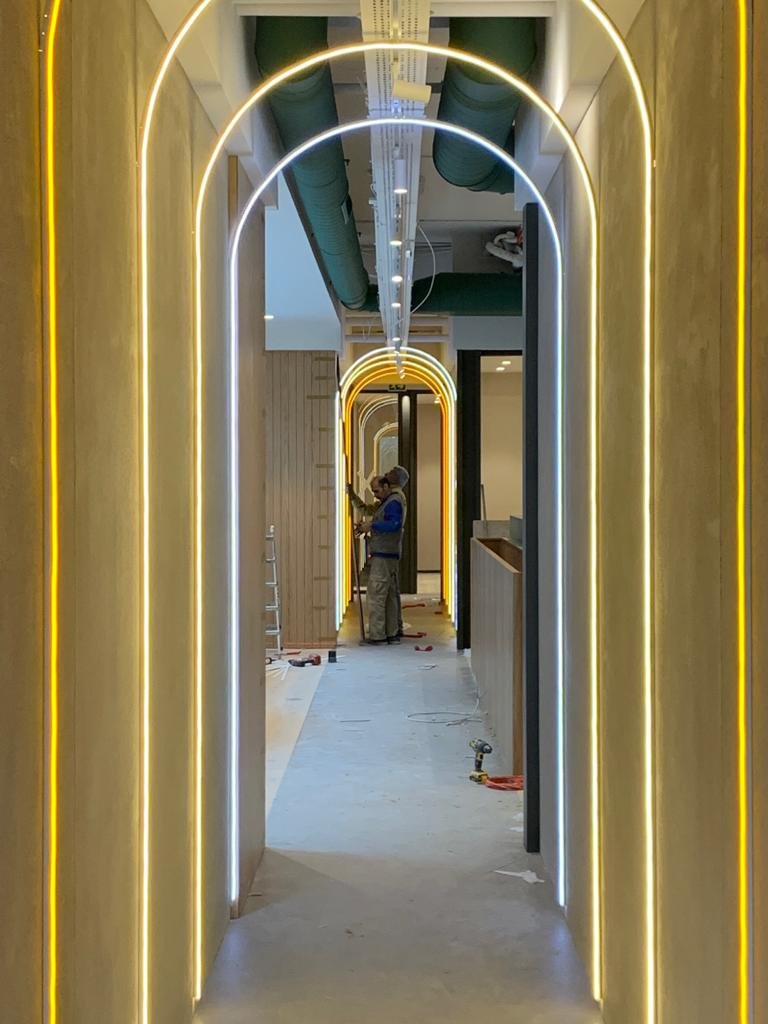
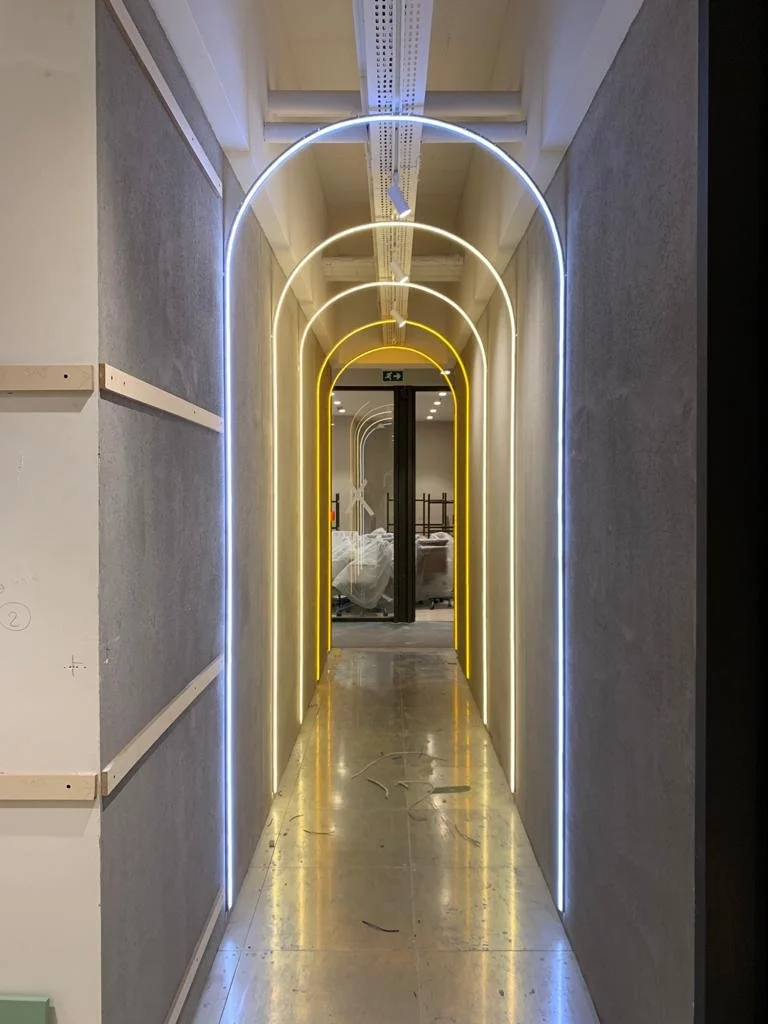
Confronted with two 4-meter-long, narrow walls, this project reimagines limitation as opportunity. Instead of framed works that would flatten the space, LED neon archways with degrading hues transform the corridor into an immersive passage, inviting visitors to move through light, rhythm, and atmosphere.
Client
Kolektif House Ataşehir
Year
2020